

“Silent Medievalisms is a feat of interdisciplinarity, covering individual films and filmmakers, literary adaptations, documentaries, staged authenticity, cinema as a collaborative art, the relationship between narrative and spectacle in early film, historical context, and marketing and distribution. A sophisticated, informative work.” —Susan Aronstein, author of Hollywood Knights: Arthurian Cinema and the Politics of Nostalgia
“Silent Medievalisms fills a longstanding gap between medieval studies and film studies. Pugh and Weisl do an excellent job of bridging what are sometimes disparate disciplines and remind us of experiments and achievements in silent film that have been forgotten over the past century.” —John M. Ganim, author of Chaucerian Theatricality
Silent Medievalisms investigates the prevalence of medieval narratives and tropes during cinema’s silent era and explores the ways that silent movies use the past to communicate political, national, propagandistic, and social meanings in their present moment. Groundbreaking films such as Joan the Woman (1916), Douglas Fairbanks in Robin Hood (1922), The Passion of Joan of Arc (1928), and several others provide a rare opportunity to ponder the intersection of the newest technologies with narratives that predate them by many centuries. Narrative themes and tropes are distinct from the technologies that (re)create them, yet they are imbricated within complex networks of possibility and production. Contributors consider the persistent restaging and appeal (even when problematic) of medieval tropes, illuminating the essential nature of the medieval to early cinema across geographies, methodologies, and ideologies. They examine the relationship between the old and the new, made oblique when the new would seem to eclipse the old as emergent technologies seismically shifted the ways in which audiences consumed narratives. Ultimately, Silent Medievalisms demonstrates how those technologies enabled diverse visions of the Middle Ages—historical, fantastical, political—in ways that other media did not.
Contributors: Kimberly Ball, Elizabeth Coggeshall, John Haines, Kevin J. Harty, Valerie B. Johnson, Tison Pugh, Sabina Rahman, Carol L. Robinson, Robert Squillace, Alexandra Sterling-Hellenbrand, Alfred Thomas, Laura E. Wangerin, Angela Jane Weisl
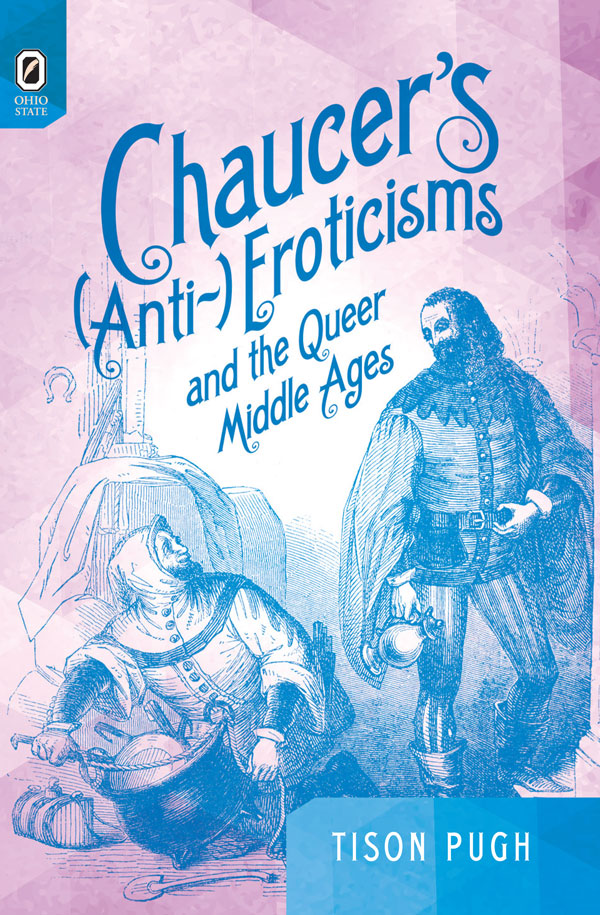
Tison Pugh is Pegasus Professor of English at the University of Central Florida. He is the author of numerous books, including Bad Chaucer: The Great Poet’s Greatest Mistakes in the “Canterbury Tales,” Queer Oz: L. Frank Baum’s Trans Tales and Other Astounding Adventures in Sex and Gender, and Chaucer’s (Anti-)Eroticisms and the Queer Middle Ages.
Angela Jane Weisl is Professor of English at Seton Hall University and author of The Persistence of Medievalism: Narrative Adventures in Contemporary Culture and Conquering the Reign of Femeny: Gender and Genre in Chaucer's Romance.
Contents
List of Illustrations
Introduction On Silent Films, Medieval Sites of Intelligibility, and the Thanhouser Company’s Oh, What a Knight! (1910)
Chapter 1 The Magic Mechanic: Georges Méliès’s Cinematic Medievalism
Chapter 2 Making Presence in Silence: Milano Films Adapts Dante’s Inferno (1911)
Chapter 3 Lucius Henderson’s Tannhäuser (1913), Richard Wagner, and Their Imagined Middle Ages
Chapter 4 “While Helpless Whites Looked On”: The Intersection of White Nationalism and Medievalism in D. W. Griffith’s The Birth of a Nation (1915)
Chapter 5 Virginity, Allegory, and Orgiastic Visuality in Cecil B. DeMille’s Joan the Woman (1916)
Chapter 6 Medievalism, Generic Fluidity, and (Maybe Even) Proto-Feminism in Benjamin Christensen’s Häxan (1922)
Chapter 7 Bad Blood: The Spectral Jew and Mimetic Rivalry in F. W. Murnau’s Nosferatu (1922) and Hartmann von Aue’s Der arme Heinrich
Chapter 8 Queen of Love and Beauty: Fictions of Marian’s Sovereignty in Douglas Fairbanks in Robin Hood (1922)
Chapter 9 Medievalism, Trauma, and Vengeance in Fritz Lang’s Die Nibelungen (1924)
Chapter 10 What’s Past Is Not Prologue: Temporal and Spatial Dislocation in Carl Theodor Dreyer’s The Passion of Joan of Arc (1928)
Chapter 11 Wilding the Tame: The Viking (1928) from Adaptation to Genre Archetype
Chapter 12 The Lost Music of Medieval Silents
Acknowledgments
List of Contributors
Index
Related Titles:
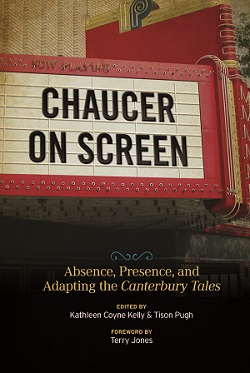
Chaucer on Screen
Absence, Presence, and Adapting the Canterbury Tales
Edited by Kathleen Coyne Kelly and Tison Pugh
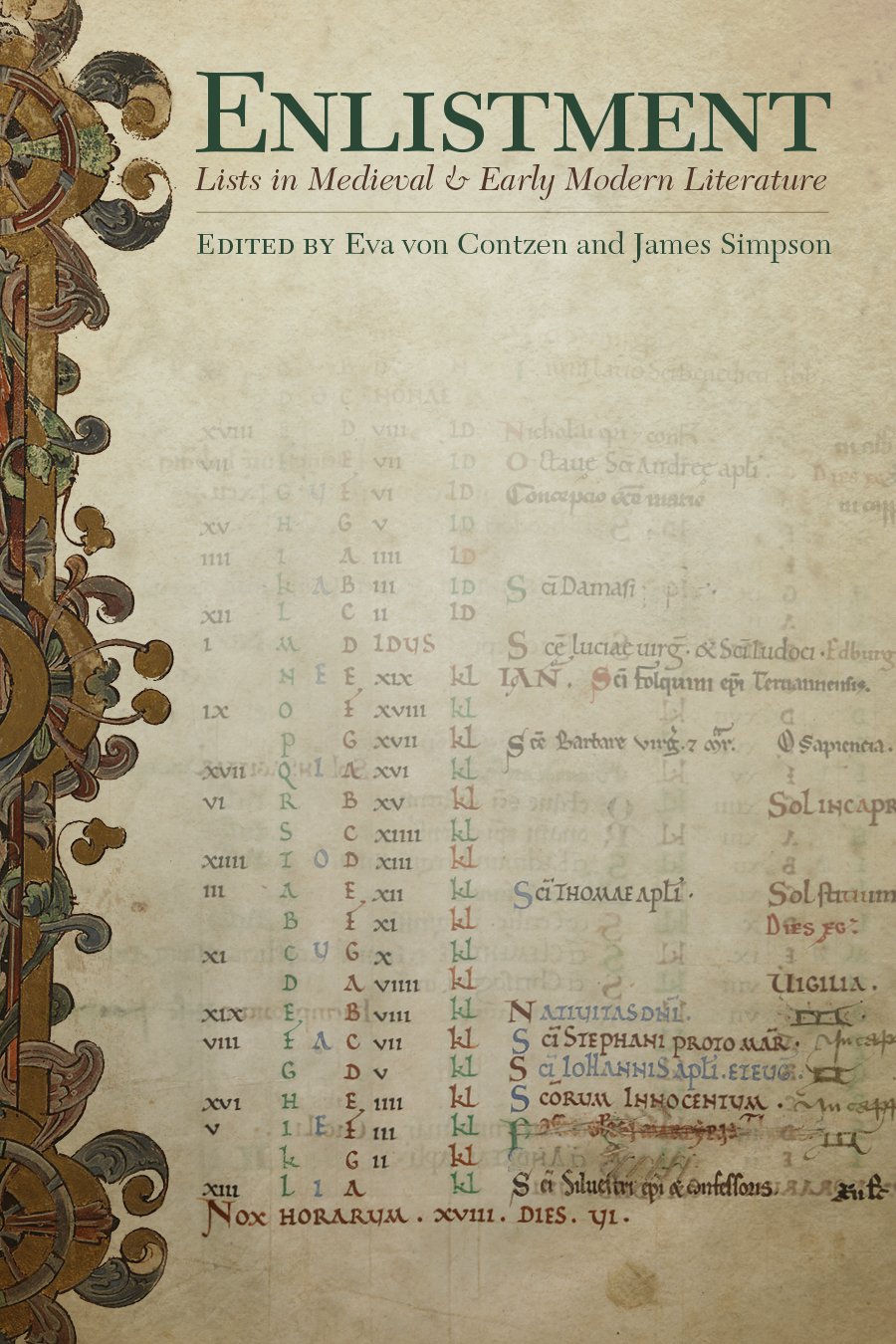
Enlistment
Lists in Medieval and Early Modern Literature
Edited by Eva von Contzen and James Simpson