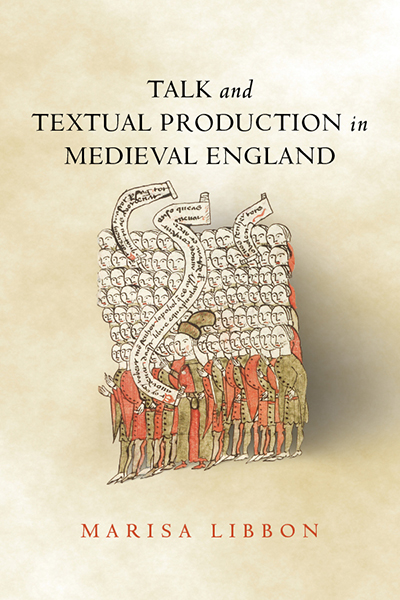

“The Epic Catalogue opens an important conversation about why and how a controversial transhistorical literary form—one that readers have tended to skip or elide—survived. Von Contzen eschews a totalizing narrative of literary history, instead valuing the generative and associative aspects of literary forms.” —Marisa Libbon, author of Talk and Textual Production in Medieval England
“Von Contzen persuasively demonstrates that epic catalogues in English literature from the tenth to the seventeenth centuries are not narrative interruptions but crucial tools for thinking, capable of evoking emotion, challenging authority, and manipulating readers’ experience of time and space.” —Janet Schrunk Ericksen, author of Reading Old English Biblical Poetry: The Book and the Poem in Junius 11
“The catalogue is the poorest and dullest cousin of rich and ever-varied literary texts; we tend not to invite it to the literary critical symposium. The ancient form of the catalogue turns out to be an intriguing guest, a conversation partner who helps us understand those more brilliant narrative cousins: illuminating literary narrative’s promise of life-saving completeness and the disappointment prompted by inevitable incompleteness.” —James Simpson, coeditor (with Eva von Contzen) of Enlistment: Lists in Medieval and Early Modern Literature
In The Epic Catalogue, Eva von Contzen offers the first sustained study of the catalogue as form in epic poetry, tracing its functions and meanings across medieval and early modern literature. Ever since the Catalogue of Ships in Homer’s Iliad, catalogues have stood at the heart of epic poetry, yet their status is paradoxical: canonical and indispensable for the genre of epic, but also resistant to narrative flow and therefore both a challenge and a nuisance to audiences. Moving from biblical epic and Milton’s Paradise Lost to Beowulf and early English poetry, von Contzen presents four case studies that examine the catalogue’s role in shaping poetic authority, readerly engagement, and the reception of classical models. Von Contzen’s literary-historical approach bridges classical and vernacular traditions from early English to early modern poetry and sharpens our view of both continuities and ruptures in the epic tradition, challenging conventional narratives of classical reception. Bringing together formalist and cognitive literary methodologies, she argues that catalogues are not inert enumerations but dynamic cognitive forms that invite audiences to think differently about order, memory, and the status of epic itself.
Eva von Contzen is Professor of English Literature at the University of Freiburg. She is the author of The Scottish Legendary: Towards a Poetics of Hagiographic Narration and coeditor (with James Simpson) of Enlistment: Lists in Medieval and Early Modern Literature.
Contents
Introduction
Chapter 1 Amazement and Eternity: Catalogues and the Biblical Epic
Chapter 2 Epic Catalogues and Poetic Authority: The Matter of Troy in the Middle Ages
Chapter 3 The Consolation of Trees: Chaucer’s Epic Pretensions
Chapter 4 Early English Poetry and the Specter of the Catalogue Form
Conclusion
Acknowledgments
Appendix Homer’s Legacy: The Epic Catalogue in the Medieval Latin Troy Tradition in England
Bibliography
Index
Related Titles:
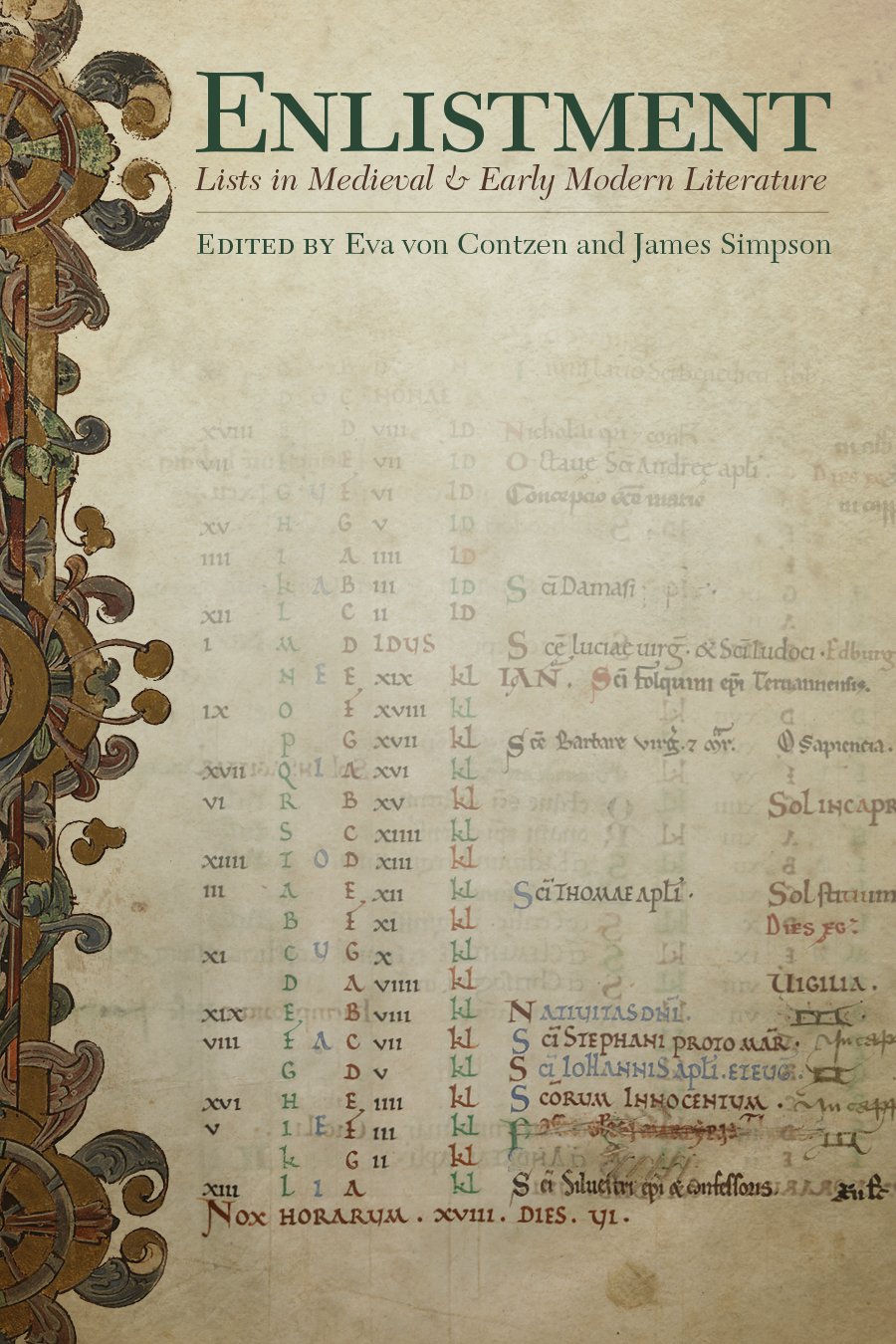
Enlistment
Lists in Medieval and Early Modern Literature
Edited by Eva von Contzen and James Simpson