
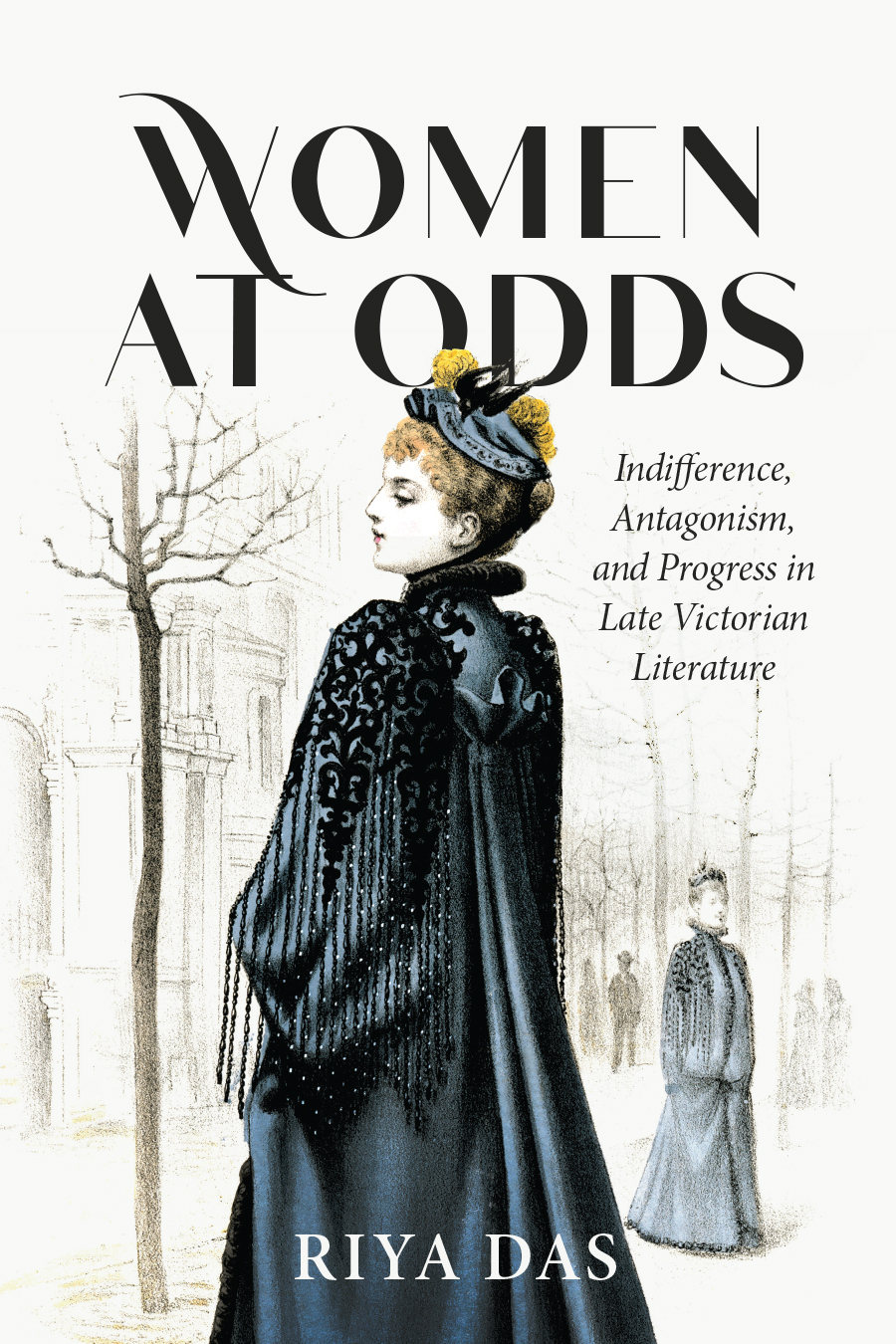
“Das’s volume adds an interesting new argument to the role of late-19th-century Victorian women. The Victorian female has received extensive scholarly study, but Das expands the conversation...Summing Up: Highly recommended. General readers through faculty.” —L. M. Purdy, CHOICE
“A much-needed re-examination of the New Woman in late Victorian literature....Women at Odds convincingly demonstrates how female antagonism and indifference are often used strategically to serve the New Woman’s individual interests.” —Lindsey Carman Williams, Nineteenth-Century Gender Studies
“Imminently readable and delightfully original....[Women at Odds] does what all good literary criticism should do: intrigues the reader in the moment of consumption and endures in the reader’s mind long after.” —Lana L. Dalley, Review 19
“Das offers a provocative intervention in Victorian feminist literary studies, challenging the long-standing critical emphasis on female solidarity as the dominant mode of feminist progress....An essential contribution to Victorian studies and beyond.” —Christine Choi, Australasian Journal of Victorian Studies
“Women at Odds creatively upends traditional wisdom about fin de siècle womanhood....[it] invites us, therefore, to rethink the progress that New Woman feminism achieved, how they went about getting their professional goals, and who got left behind in the process.” —Christian Lewis, Victorians Institute Journal
In Women at Odds, Riya Das demonstrates the limitations of female solidarity for the New Woman in Victorian society. On the one hand, feminist antagonism disrupts the status quo in unanticipated ways, and it helps open new domestic and professional pathways for women. On the other hand, the urban professional New Woman’s rhetoric recycles distinctly sexist, racist, and classist conventions, thereby bringing middle-class Englishwomen dialectically—what Das terms “retro-progressively”—into the labor pool of the British empire.
While foregrounding the figure of the New Woman as a white imperialist reformer, Das illustrates how the New Woman movement detaches itself from the domestic politics of female friendship. In works by George Eliot, George Gissing, Olive Schreiner, Bram Stoker, and others, antagonism and indifference enable the fin de siècle New Woman to transcend traditionally defined roles and fashion social progress for herself at the expense of femininities she excludes as “other.” By contesting the critical notion of solidarity as the only force that brings Victorian women’s narratives to fruition, Women at Odds reveals the troubled but effective role of antagonistic and indifferent reformist politics in loosening rigid social structures for privileged populations.
Riya Das (she/her) is Assistant Professor of English at Prairie View A&M University, where she specializes in nineteenth-century British literature, gender, and empire. She is currently editing the first-ever critical edition of Mona Caird’s feminist novel The Daughters of Danaus. She was awarded an NEH grant to support this book.
Contents
Acknowledgments
Introduction Wives and Daughters Leaving Home: Indifferent and Antagonistic New Women
Chapter 1 An Unsympathetic Network: Female Defiance as Narrative Force in Daniel Deronda
Chapter 2 Antagonistic Boundaries: The Woman Professional’s Retro-Progress in The Odd Women
Chapter 3 Settler Colonial Feminism: Unsustainable Indifference and Antagonism in The Story of an African Farm
Chapter 4 In Solidarity with Empire: The Professional Wife and Mother in Dracula
Conclusion Antagonism and Indifference: Twenty-First-Century Affordances
Works Cited
Index
“This cogent work...is yet another example of the fine new scholarship that, fortunately, often targets George Eliot’s work....A fascinating book.” —Brenda McKay, George Eliot Review
“Das reframes the conversation around social dynamics among women in Victorian fiction, presenting a fresh perspective on oft-studied texts. Thought-provoking close readings informed by a historicist lens on gender, class, race, and other forms of difference make Women at Odds essential reading for scholars of Victorian literature, gender, and narrative.” —Lise Shapiro Sanders, author of Consuming Fantasies: Labor, Leisure, and the London Shopgirl, 1880–1920
“Women at Odds builds on and complicates existing critical conversations in Victorian and feminist studies. Das defies the long-held assumption that solidarity and collaboration are the basis for women’s progress, highlighting instead how some women are marginalized to enable the advancement of others.” —Rachel Hollander, author of Narrative Hospitality in Late Victorian Fiction: Novel Ethics
Related Titles:
The Necromantics
Reanimation, the Historical Imagination, and Victorian British and Irish Literature
Renée Fox